“This is demonstration text used as a placeholder for a future case study. It outlines a generic project scenario where a team collaborates with a client to achieve a set of undefined goals. The purpose of this filler content is simply to represent the flow, tone, and structure of a completed case study without referencing any actual project details. In this sample narrative, the team explores a problem, proposes a solution, and delivers an outcome that is intentionally vague. The text highlights broad themes such as improved efficiency, better user experience, and positive results, allowing designers or editors to visualise how real content will appear once finalised. This demo copy can be replaced at any stage with authentic information relating to objectives, process, insights, and measurable results. Its only role is to maintain layout consistency and provide context during the drafting or design phase.”
If you want it shorter, longer, or styled differently, just tell me.
The HPE Partner Celebration Awards for 2022 took place on Thursday 26 January 2023 at HI-SO Rooftop Bar in Auckland.
Lexel was thrilled to receive two awards for 2022:
Aruba Partner of the Year
Marketing MVP – Justine Randall
Thank you to HPE and Aruba and all the Lexel staff who contributed throughout 2022 to our achievements. We’re looking forward to more successes with HPE and Aruba in 2023!
It was the first day of a long weekend when the first alarm notification was received. One of our client’s laptops had detected malware. Initially, it seemed like an isolated incident – perhaps a careless click on a phishing link. But, as our team investigated, the situation unfolded into a full-scale cybersecurity nightmare resulting in all the client’s servers being locked with crypto ransomware.
We had worked with the client initially to identify some areas they needed to investigate along with proposed improvements to mitigate their risk. However, like many small businesses in New Zealand, the client did not feel they were at high risk of being attacked. Unfortunately, the worst did happen to them, and this incident highlights several critical vulnerabilities and lapses in security measures that the attackers exploited.
In the diary of our Senior Security Consultant – Glenn Nummy, he writes about how our team worked through the incident, investigating and identifying when and how the cybersecurity criminals made their calculated attacks. Follow the incident below as it unfolded.
Day 1 – The Critical Weekend
From that first alarm notification, I began piecing together the logs of breached security protocols and a clear picture began to emerge. Thankfully the client had been keeping consistent logs for up to 6 months before the attack, which made it easier to piece together what had happened in this incident. The attackers had not just stumbled upon our client; they had chosen them specifically because of a known vulnerability.
The servers, critical to the client’s operations, lacked endpoint protection. Although this was an area of weakness we identified with recommendations made to reduce their risk, the client decided because the servers were not being accessed by unprivileged users, they would only add endpoint protection to their network laptops. This left the servers exposed. The client had also left their web admin access page open, so the firewall was open to all public addresses, and unfortunately, the ‘Trusted Hosts’ setting was not enabled. These oversights ultimately allowed the attackers to create a backdoor into the client’s network.
Week 1 – Unravelling the Attack
The attackers had patiently waited for the perfect moment to strike – a public holiday over a long weekend, knowing well that system surveillance would be minimal. They executed a ransomware attack that locked all our client’s servers, encrypting everything! The backups, which should have been step oneof their incident response plan, were also destroyed. Fortunately, a random and unrelated backup made earlier in the week by chance ended up saving the day, albeit only temporarily.
Week 2 – Forensic Deep Dive
The true extent of the attack came to light through an intensive forensic investigation I performed for the client. The attackers had used the public holiday weekend to deploy ransomware, but from the activity I was able to piece together, it was clear that their preparation began much earlier, in fact, it was almost 6 months since they first gained access! There was no noise, suspicious activity or alarms triggered from when they first gained access. The attackers moved with stealth and remained undetected.
From the logs, I could see the attackers had exploited a patched firewall vulnerability, gaining access one day before the client team applied the required patch. The attackers created a VPN account where they likely brute-forced the domain controller, or monitored traffic, to get passwords as they came through the firewall. To the attackers, the client was “low-hanging fruit”. It was clear that the attackers had patiently monitored the network, waiting for the right vulnerability to exploit.
The Impact
Operational Disruption: The encryption of all servers caused a significant halt in operations, leading to downtime of 3 to 4 days and loss of revenue.
Data Integrity: The encryption of their data lead to data loss as their full backups were compromised.
Security Breach: The extended undetected presence of the attackers within the network raised concerns about data exfiltration and other potentially malicious activities.
Month 2 – Learning and Rebuilding
In the wake of the attack, the focus shifted towards recovery of data and rebuilding stronger defences. We recommended robust endpoint protection and suggested the client establish a stringent patch management policy. The client firewall settings were overhauled to allow access only from trusted hosts, and advanced network monitoring tools were deployed to ensure that any unusual activity could be detected and addressed swiftly.
Month 6 – Reflection and Vigilance
Looking back, the attack was a wake-up call for our client. It highlighted the importance of proactive security measures and the dangers of complacency. We now conduct regular security awareness training for all their employees, emphasising the role of everyone in safeguarding the business’s digital assets. Our client’s recovery was not just about restoring data but getting better prepared and rebuilding trust – trust in their systems, their processes, and, importantly, in us as their partner.
These diary entries are not just a recount of a cybersecurity incident; it’s a stark reminder of the realities of cyber threats. For business owners, it’s a call to action to assess your security posture, understand your risks and vulnerabilities, and implement robust security measures to reduce your risk.
Don’t wait for a breach to happen; prepare now as if you’re already compromised so your team know how to react if the worst does happen. The integrity and continuity of your business depend on it.
If the thought of your small/medium size business being crypto ransomwared makes you feel sick, get in touch with our team of cyber security specialists for a chat.
Glenn is a Senior Security Consultant at Lexel, with over thirty years of experience in Information Technology. The last twenty years he’s focused on Network and Security across a number of disciplines including higher education, government & private industries.
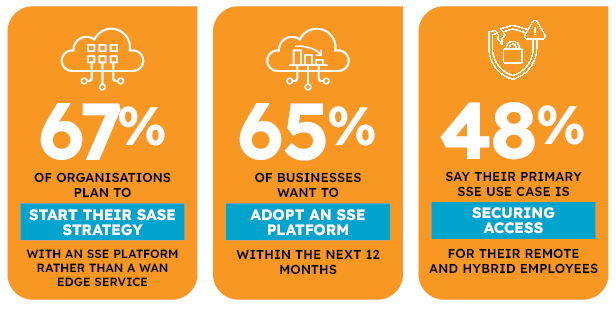
As technology rapidly evolves, businesses must not only adapt and harness new solutions to remain competitive, but the responsibility also now falls on the business owners to show risk mitigation. Switching to more advanced frameworks like Aruba SASE can seem daunting, but let’s explore these hesitations and some insights below:
1. Resistance to Change: The VPN Tradition
The most common response we hear when talking about adopting new technology is, “We’ve always done it this way,” referring to traditional VPN connections on laptops. While this solution may be familiar, VPNs often grant broad and unrestricted network access, unknowingly increasing your risk. For example, when third-party contractors connect to your system from a potentially compromised device, they could unintentionally create a backdoor into your internal networks which may be used in the future for malicious activity.
Unlike traditional VPNs, SASE (Secure Access Service Edge) enables you to tightly control access to specific network resources. It integrates trusted cloud identities and two-factor authentication (2FA), bolstering your security posture. With SASE, you don’t need expensive managed WAN services; a stable internet connection will do, significantly reducing costs and the external attack surfaces.
2. Reliance on Legacy Applications
Many businesses rely on legacy applications central to their operations for years, if not decades. The problem is as cybercriminals become more advanced, hacking your legacy software becomes an easy target. Older technology is more likely to have unpatched vulnerabilities that hackers know how to exploit, making it easy for them to bypass security measures. Legacy applications often lack modern security features like encryption, multi-factor authentication, or regular security updates, giving hackers an easy path to sensitive data.
Transitioning to SASE can reduce the risk by removing the need for legacy MPLS WAN solutions. This not only cuts long-term costs but also shields older, on-premises applications (like unpatched email servers) from cyberattacks, particularly through old unmaintained software. SASE also uses Zero Trust Network Access (ZTNA) principles to ensure that each user, device, and application is authenticated and authorised before gaining network access. This limits potential damage in the event of a security breach. By centralising access policies and applying them consistently, it prevents unauthorised users from accessing and exploiting legacy applications. and provides a robust defence layer for your critical business operations.
3. Skills Shortages and Knowledge Gaps
A significant barrier to technology adoption is the lack of specialised skills and knowledge within in-house IT teams. Often, these teams are made up of generalists by necessity, particularly in small to medium-sized businesses where they may ‘wear many hats’. As a result, they may not have the expertise to design, implement, or manage a solution like the SASE framework. Much like the initial shift to cloud email services a decade ago, moving to new technology may feel like a leap into the unknown, making businesses hesitant to adopt this advanced security solution.
By partnering with a leading industry expert, businesses can tap into advanced, managed network security services tailored to specific needs. This allows in-house IT staff to focus on their core responsibilities without the constant pressure to upskill in new, specialised fields. SASE ensures that network security is handled by experts who follow best practices and maintain a robust, secure infrastructure. This empowers businesses to reap the benefits without worrying about the cost and time it takes to upskill existing IT team members or hire a full-time employee with this type of specialist knowledge.
Embracing Change: Lessons from the Past
Just as businesses eventually embraced cloud technologies like Office 365, adopting SASE represents a forward-thinking shift that aligns with modern business practices. It’s important to not just react to technological advancements but to proactively integrate them into your business framework. This strategic approach ensures enhanced security, improved efficiency, and a competitive edge in today’s digital landscape.
At Lexel Systems, we understand the challenges business owners and their IT Managers face in navigating these changes. We are here to support your transition to a safer, more secure network infrastructure through our network of trusted business partners. Embrace the change and move your business towards a future-proof IT environment.
With over 20 years of experience in the IT industry, Nick is a consultant at Lexel specialising in Aruba, with a focus on design and implementation across various industries.
Reducing environmental impacts is a win for your business, long term. Here’s why:
Consumer Preference:Climate change is a major concern for 36% of New Zealanders, who are committed to buying from companies dedicated to reducing their environmental impact. By aligning your business with sustainable practices, you can attract and retain environmentally conscious customers, thereby enhancing your brand reputation and long-term profitability.
Regulatory Compliance: With the New Zealand government tightening regulations on environmental protection, businesses that proactively reduce their environmental footprint can avoid potential fines and penalties. By implementing sustainable practices now, you can ensure compliance with future regulations and safeguard your business against regulatory risks.
Resource Efficiency: New Zealand businesses spend an estimated $1.2 billion annually on energy costs alone. By adopting energy-efficient technologies and practices, businesses can significantly reduce their energy consumption and operating costs. Investing in sustainable solutions lowers expenses and improves resource efficiency, enhancing your business’s resilience and competitiveness overall.
Now that you understand the importance of sustainability, here are five practical ways to incorporate it into your IT infrastructure strategy:
Reduce Energy Use
HPE ProLiant Gen11 servers offer up to 43% more energy efficiency and up to 99% improved performance compared to earlier generations, helping to lower energy consumption and reduce server footprints.
Implement Virtualisation and Cloud Solutions
Ultimate Power with 5th Gen Intel® Xeon® Scalable Processors: Supporting up to 64 cores per processor, these servers deliver 21% improved overall performance compared to earlier generations. These processors provide an intuitive cloud operating experience with trusted security and optimised performance, advancing a wide range of challenging workloads, including AI and ML.
Reduce Data Centre Footprint Merge workloads onto fewer Gen11 servers, requiring 50% to 90% fewer racks. This minimises data centre footprint and colocation costs while handling growth and new workloads effectively.
Cut Cooling Costs Designed with improved airflow and compatibility with future cooling technologies like liquid cooling, Gen11 servers optimise cooling efficiency, reducing cooling costs while delivering higher performance.
Promote Employee Awareness and Engagement Educate employees about the importance of sustainability and encourage them to adopt eco-friendly practices in their daily work routines. Foster a culture of environmental responsibility by organising training sessions, implementing green initiatives, and recognising sustainable behaviours. By engaging employees in sustainability initiatives, you can amplify the impact of your efforts and create a more environmentally conscious workplace.
Together, We Can Create a Better, Greener Tomorrow
Let’s discuss how Lexel, with its managed services and top-notch endpoint devices and printing solutions, can take your organisation’s sustainability efforts to new heights.
Book a consultation with Lexel to discuss a sustainability strategy for your IT infrastructure.






 Author:


